

Skin Health
La Eureka Laser Team • 8 min read • Brampton, ON
Quick answer
Yes, laser hair removal can be safe and effective on brown and dark skin, but only with the right technology. Older diode and IPL machines were built and tested mostly on lighter skin, which is where the reputation for burns and dark marks comes from. Devices with a longer Nd:YAG wavelength, like the Soprano ICE Platinum we use, are FDA cleared for all skin types (Fitzpatrick I to VI), including tanned skin.
If you grew up hearing that laser hair removal “doesn’t work” on brown skin, or you know someone who ended up with dark patches after a treatment gone wrong, you’re not imagining things. That reputation is real, and it’s earned, just not for the reason most people think.
Brampton is one of the most diverse cities in Canada, and a large share of our clients have medium to deep skin tones. So this isn’t a small technical footnote for us. It’s a conversation we have almost every single day, and it deserves a proper answer instead of a one-line reassurance on a price list.
Why the Bad Reputation Exists
Laser hair removal works by targeting melanin, the pigment in your hair. The laser heats the hair follicle enough to damage it, ideally without touching the surrounding skin. That’s easy when there’s a big contrast between dark hair and light skin. The laser can tell the difference.
The problem shows up when your skin itself has a lot of melanin too. Older lasers, especially the shorter-wavelength diode and IPL machines that were common ten or fifteen years ago, have a hard time telling the difference between the hair and the skin around it. Instead of just heating the follicle, they end up heating the skin’s surface as well. That’s how you get burns, blistering, or the dark patches (post-inflammatory hyperpigmentation) that can take months to fade.
None of that means laser hair removal is unsafe for darker skin as a category. It means a specific generation of equipment was genuinely risky for it, and a lot of people were treated with that equipment before better options existed.
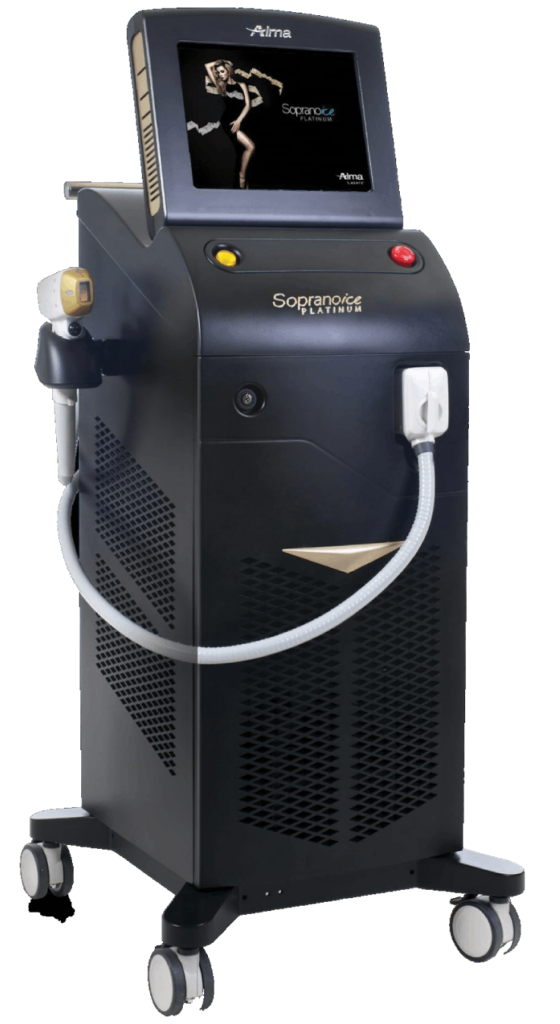
The Soprano ICE Platinum combines three wavelengths in one handpiece, including one built specifically for deeper skin tones.
A Quick Word on Skin Types
Dermatologists classify skin using something called the Fitzpatrick scale, which groups skin into six types based on how it responds to sun exposure. It’s not a perfect system and it’s not a diagnosis, but it’s the same language most clinics and laser manufacturers use when they talk about safety, so it’s worth knowing roughly where you fall.
| Type | General description |
|---|---|
| I – II | Very light to fair skin, burns easily, rarely tans |
| III – IV | Light brown to olive or medium brown, tans gradually |
| V – VI | Brown to deeply pigmented dark brown skin, rarely burns |
Most South Asian, Middle Eastern, Black, and many Latino and Mediterranean clients fall somewhere in the III to VI range. This is exactly the range where laser choice matters most, and where asking about the equipment before you book isn’t overthinking it.
Worth knowing: being told laser “won’t work” on your skin usually means the clinic didn’t have the right equipment, not that your skin is somehow unsuitable for laser hair removal in general.
What Actually Makes a Laser Safer for Darker Skin
Two things matter here: wavelength and how the energy is delivered.
| 01 | Longer wavelengths go deeper and skip more of the skin’s surface An Nd:YAG wavelength (1064nm) passes through surface melanin more easily and reaches the follicle without heating the top layer of skin as much. This is the wavelength most associated with safe treatment on deeper skin tones. |
| 02 | Gradual, repeated energy beats one big burst Older machines fire one strong pulse and hope for the best. Newer in-motion technology delivers many small pulses while cooling the surface at the same time, building up heat in the follicle slowly instead of shocking the skin all at once. |
This is exactly why we standardized on the Soprano ICE Platinum. It combines three wavelengths, including the 1064nm Nd:YAG, in a single handpiece, and it’s FDA cleared for all six Fitzpatrick skin types, tanned skin included. It doesn’t fire one aggressive pulse. It uses a sweeping, in-motion technique that builds heat gradually while continuously cooling the skin, which is a big part of why the treatment ends up feeling more comfortable too, not just safer.
You can read more about the treatment itself on our Laser Hair Removal page.
What to Actually Expect If You Have Deeper Skin
A patch test isn’t optional for anyone, but it matters even more here. We’ll test a small area first, check how your skin responds, and adjust the settings before treating anything larger. It’s a slower start, but it’s the whole point of the free consultation, not just a formality we rush through.
During treatment, some mild redness or warmth right after is normal for every skin tone and usually settles within a few hours. What you shouldn’t see is blistering, prolonged burning, or dark patches that don’t fade. If anything feels off during or after a session, tell your esthetician immediately, not at your next appointment weeks later.
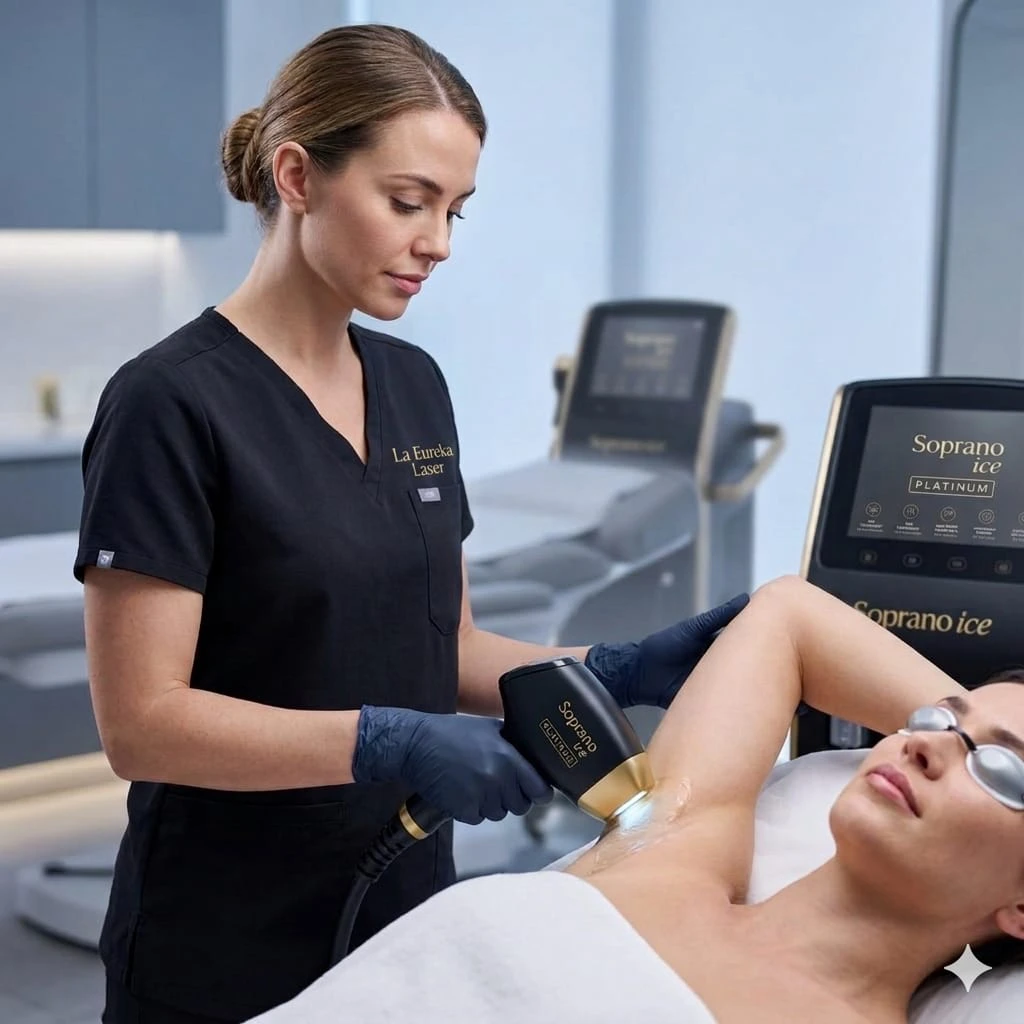
Results after a series of sessions using the correct wavelength for the client’s skin tone.
One more honest note: sun exposure and tanning make any skin more reactive to laser, deeper skin tones included. If you’ve been at the beach or in a tanning bed recently, tell your esthetician before your appointment rather than after.
If You’ve Been Burned Before, Literally or Figuratively
We hear this a lot: someone tried laser years ago at a discount clinic, ended up with marks that took months to fade, and swore off laser hair removal entirely. That experience is valid, and it makes total sense to be cautious now. But it usually says more about the equipment used on you back then than about whether laser can work for your skin today.
Before you book anywhere, including with us, it’s worth asking directly what laser they use and whether it’s rated for your skin type. We actually wrote a full breakdown of the other questions worth asking any clinic in our post on what to ask before you book laser hair removal in Brampton. The equipment question belongs right at the top of that list if you have deeper skin.
How We Approach It at La Eureka Laser
We treat every skin tone with the same device and the same care, because that’s the only way to actually guarantee consistent safety instead of hoping for the best. Your free consultation and patch test give us a real read on your skin before anything else happens, and we’ll tell you honestly if something needs a different approach.
Full body and single-area treatments with the Soprano ICE Platinum, FDA cleared for all skin types.
Bundle multiple areas together once you’re comfortable with how your skin responds.
If past treatments elsewhere left marks or uneven tone, this is where we’d start repairing that.
You can read more about our team’s training on the About page, and see our full menu on the Services page.
Come see how your skin actually responds.
Free consultation, free patch test, honest answers about what’s realistic for you.
This post is meant to help you ask better questions, not to replace a real conversation with a licensed esthetician about your specific skin. If you’ve got scarring, a skin condition, or you’re just not sure where you fall on any of this, bring it up at your consultation or reach out through our Contact page first.
La Eureka Laser TeamLicensed estheticians based in Brampton, ON, trained through Marca College’s Medical Esthetics program.